Saturday, October 27, 2018
Sunday, October 21, 2018
Assignment 1b : MISE-EN-SCENE in Harry Potter and the Deathly Hallows
For this assignment, I have chosen to watch the movie "Harry Potter and the Deathly Hallows pt 2" to analyze aspects of mise en scène: costume, setting, staging, and lighting. I chose this film to analyze because it is very easy to analyze, I believe I have seen an advertisement for the universal studio, and due to the fact that I ain't have anything better to watch.
SETTING:
The set designers from this movie chose to use multiple different settings, but all relates back to the idea that the movie takes place in a fantasy world, For instance; Hogwart, Gringotts wizardry bank, and Diagon Alley. To go more in depth, the beginning of the movie kicks thing off moments where part one ended, on the beach where Harry and friends are burying Dobby the Elf, who sacrifices himself to save the crew, giving off a more greyish-dark and serious tone that follows throughout the majority of the film. The setting of the movie is important because it creates both a sense of place and a mood which helps the audience pick up the Harry Potter film is going to be very dramatic and very magical.
LIGHTING:
Majority of the film was in the low-key lighting due to the fact to match the tone of the main theme and story. Elaborating on the last statement, since the main antagonist, Lord Voldemort, became introduced in the cinematic series, the plot became to take a more dark tone rather than being as joyous and vibrant, such as it was in the first three films due to the reason there has not been a major threat yet. Low-key lighting is the fill light at a very low level, causing the frame to be cast with large shadows. This causes stark contrasts between the darker and lighter parts of the framed image, and for much of the subject of the shot to be hidden behind in the shadows, making this lighting even more efficient since the protagonist are being hunted by the dark forces as Voldemort grows more powerful in the wizarding world. Overall, this lighting just does the film more justice then the other lighting choices, such as three-Point lighting (although was sometimes used) and high-key lighting (which was rarely used) because it just set the mood for the movie from the beginning of the movie to the final battle in the movie.
COSTUME:
The use of costume conveyed during the entire film help to convey the plot of the story: a group of young and rogue wizard on the loose for seven Horcruxes to defeat a murderous and manipulative dark wizard out to rule the magic word. In other words; Harry, Ron, and Heronime are all wearing dirty clothes and looked exhausted, which may be the intention the makeup artists were going for. However all the other wizards and magical lifeforms all seemed to be wearing robes and hats, since the setting mostly takes place in the wizarding world. the costume is an important part the film because it helps to apply to the setting and plot.
STAGING AND ACTING:
Better explain from the website of college and media studies: " An actor or actress’s performance can make or break a movie regardless of how engaging the story is or how well the editing was done etc… It is the actor’s duty to bring his or her character to life within the framework of the story, and his emotional input dictates how strongly the audience feels about the film. Acting depends upon gesture and movement, expression and voice."
I felt like the whole acting from the entire cast was flawless as the movie progress you feel a certain way about certain characters, or in simpler terms, you either hate them or love them. There is a reason after all how the Harry Potter cinema has over eight movies. The Staging felt realistic also as half the scenes were taking in real life locations but sometimes on set too.
Monday, October 8, 2018
Assignment 8
5 Master Edits Post With Sound
https://www.youtube.com/watch?v=UYZV52SyqK4
the link above is my original masterpiece a few weeks back, but this time with more sound! I will not be explaining the scenes demonstrating each editing technique but rather how the noises, music and et cetera change the scene up and how it affects the human emotions.
https://www.youtube.com/watch?v=UYZV52SyqK4
the link above is my original masterpiece a few weeks back, but this time with more sound! I will not be explaining the scenes demonstrating each editing technique but rather how the noises, music and et cetera change the scene up and how it affects the human emotions.
- SOUND SOURCE:
- SOUND EDITING:
Friday, October 5, 2018
Assignment 7: Five Editing Techniques in the Boondocks
Five Editing Techniques Found in "The Boondocks"
Producer: Aaron McGrudder
(No audio included)
LEITMOTIF: A leitmotif shot includes a recurring theme, where in this case the theme was a repeated scene. So in the following clip above, The theme seems to be the ice cream melting. As the ice cream melts it helps the audience realize that a lot of time has passed as Usher and Sarah continue to have pictures and talk (In other words they are flirting) in front of Tom, who is waiting patiently so Sarah and Tom may continue their anniversary dinner.
CONTRAST: A contrast shot includes two differing shots to make the difference between them clearer. In this case, the contrast is a scene where Tom seems to be enjoying the anniversity dinner so much he burst out singing to his wife Sarah mistakenly taken her smile as if she is also having a great time, while during this scene the shots taken of Sarah shows that she is embarrassed, bored, cringing and rather be with R&B singer Usher. This contrast highlights their definition of having a great time due to the fact Sarah finds Tom is so boring and really lame, as shown through her reaction and mood in the entire scene, meanwhile Tom is having a hoot by being a straight up loser.
Parallelism: This editing technique bring two different scenes together by highlighting both their differences and the similarities between the two. In this video, Tom is doing some sort of weird musical video sequence as he get flashbacks of being kicked out of the house. These two scenes are similar as they relate to the plot: Tom being kicked out because of his insecurity of Usher and Sarah. They differ however because the Flashback scene shows us actually seeing Tom being kicked while that whole dance sequence was him singing about his hurt feelings.
Symbolism: A symbolism shot moves from one scene to the next where there is a symbolic connection between the shots. In this case, the symbolic transition lies between the Usher shirt on Tom's daughter, Jasmine, and the actual person Usher himself when he got slapped by Tom. Thus, the symbolism of the shirt panning out to reveal Usher reaction of getting slapped is a clever way of transitioning use with the symbolism technique (had to use a picture because the video kept getting corrupted).
Simultaneity: The Simultaneity editing technique uses two scenes that occurs at the same exact time or around the same time period.Normally, simultaneity is use to build suspense towards the audience. In this case, if these videos ever load you should be able to see that a crazy insecure chick is talking to a friend giving her terrible and illegal advice to deal with her suitors, while the suitor and his two grandchildren are hiding in the bathroom discussing how to get rid of her as she grows more dangerous taking the advice.
Saturday, September 22, 2018
Assignment 5 &6: 5 Master Editing Technique
Link to "5 Editing Shots" video: click here
Hello and welcome to Christopher Charlestin blog-spot ;) ! In the link above will open to a video representing of my understand of the 5 master editing technique from legendary editor, Vsevolod Pudovkin. In this blog I will go even further to elaborate on each technique since in this video it was quite vague in a standpoint.
To kick thing off, the first clip demonstrates CONTRAST. A contrast shot includes two very different scene contrast each other make the difference between them clearer. In the video, It appears that actor Christopher Charlestin is studying economics as he has a textbook and paper spread out, however, the twist comes in when we see what is going on in his mind. Charlestin is actually thinking more of goofing off then he actually is thinking about what he is actually studying. Normally using the contrast technique show a form of contradiction.
Following contrast is the next editing technique: PARALLELISM. The parallelism shot brings two different scenes together by highlighting both their differences and the similarities between them. Sometimes it does get confuse with simultaneity but could be similar in some scenarios. In the video, there are multiple cuts showing Charlestin and co-actor Trent Fentzer performing a chase scene. The similarity between the shots are that it share some start of common plot but scenes show Charlestin running away from what seems to be a threat meanwhile showing Fentzer in pursuit of something.
After parallelism is SYMBOLISM. A symbolism shot moves from one scene to the next where there is a symbolic connection between the shots. The YouTube video uses the United States of America national flag as a symbol. As a result, transitioning to Charlestin performing the pledge of allegiance in front of the American flag itself with an PowerPoint picture of the flag. This symbolism the undying patriotism of our nationalistic pride of our great big country !
Next is the SIMULTANEITY editing techniques which uses two scenes that occur at the same period of time in an attempt to build suspense. To be quite frank, during production the writers did struggle to come up with the best example with such a limited budget but the team were able to pull of with what was use in the YouTube video from the link above.The student (played by Fentzer) is being called up by a teacher (guest star Christian Bejarano) whose is waiting patiently for that student arrival. The scene switch back and forth as we see how nervous the student is while walking down to the instructor , while at the same time the audience watch in suspense as we see Bejarano waiting for Fentzer diabolically as he waits in his spinning chair staring at his computer screen.
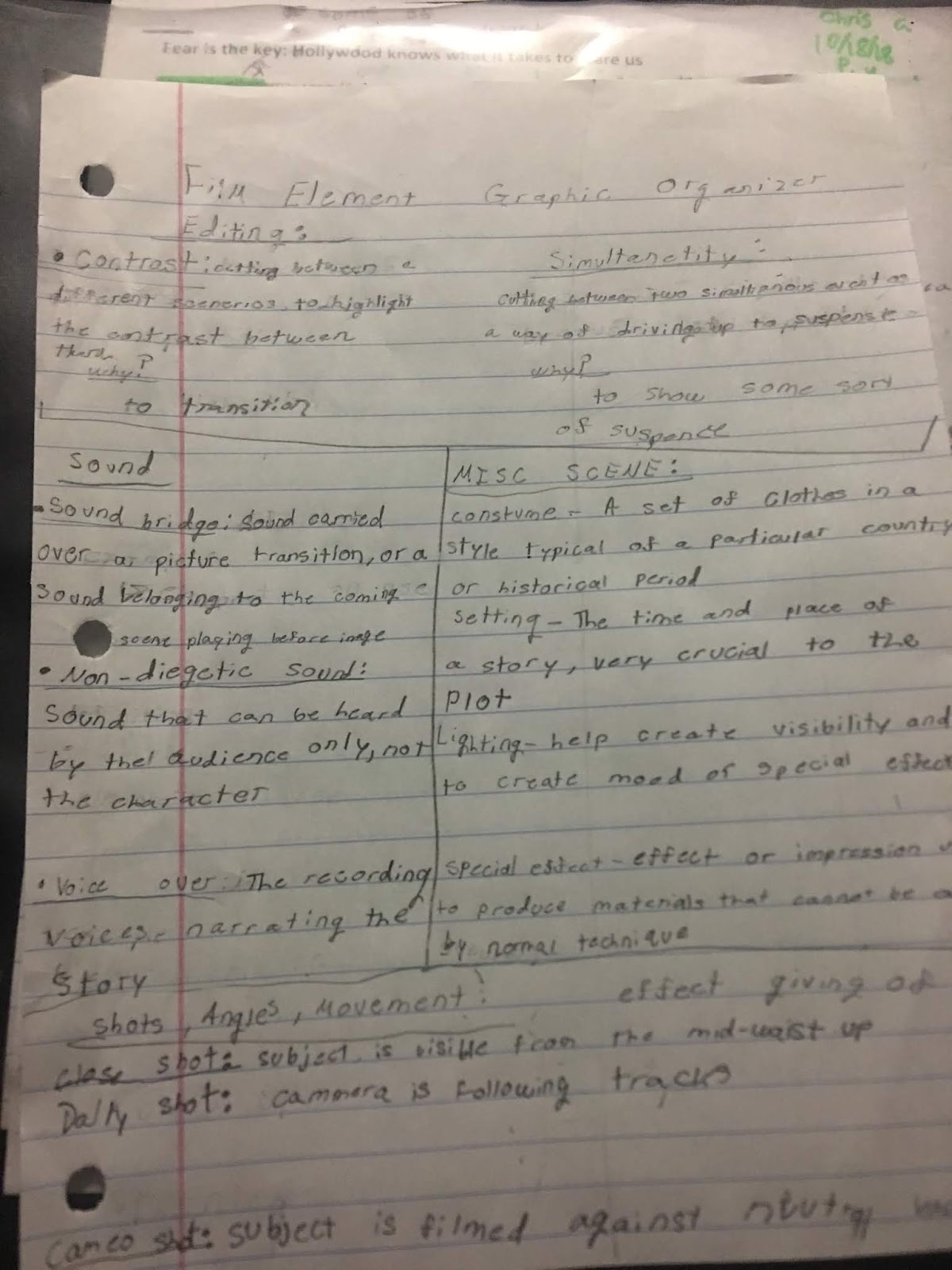
Last of the five editing technique but not least is LEIT MOTIF. Leit motif ncludes a recurring theme, where in this case the theme was the clock ticking as the time goes by. The clip how my whole Saturday routine goes every single second.
Hello and welcome to Christopher Charlestin blog-spot ;) ! In the link above will open to a video representing of my understand of the 5 master editing technique from legendary editor, Vsevolod Pudovkin. In this blog I will go even further to elaborate on each technique since in this video it was quite vague in a standpoint.
To kick thing off, the first clip demonstrates CONTRAST. A contrast shot includes two very different scene contrast each other make the difference between them clearer. In the video, It appears that actor Christopher Charlestin is studying economics as he has a textbook and paper spread out, however, the twist comes in when we see what is going on in his mind. Charlestin is actually thinking more of goofing off then he actually is thinking about what he is actually studying. Normally using the contrast technique show a form of contradiction.
Following contrast is the next editing technique: PARALLELISM. The parallelism shot brings two different scenes together by highlighting both their differences and the similarities between them. Sometimes it does get confuse with simultaneity but could be similar in some scenarios. In the video, there are multiple cuts showing Charlestin and co-actor Trent Fentzer performing a chase scene. The similarity between the shots are that it share some start of common plot but scenes show Charlestin running away from what seems to be a threat meanwhile showing Fentzer in pursuit of something.
After parallelism is SYMBOLISM. A symbolism shot moves from one scene to the next where there is a symbolic connection between the shots. The YouTube video uses the United States of America national flag as a symbol. As a result, transitioning to Charlestin performing the pledge of allegiance in front of the American flag itself with an PowerPoint picture of the flag. This symbolism the undying patriotism of our nationalistic pride of our great big country !
Next is the SIMULTANEITY editing techniques which uses two scenes that occur at the same period of time in an attempt to build suspense. To be quite frank, during production the writers did struggle to come up with the best example with such a limited budget but the team were able to pull of with what was use in the YouTube video from the link above.The student (played by Fentzer) is being called up by a teacher (guest star Christian Bejarano) whose is waiting patiently for that student arrival. The scene switch back and forth as we see how nervous the student is while walking down to the instructor , while at the same time the audience watch in suspense as we see Bejarano waiting for Fentzer diabolically as he waits in his spinning chair staring at his computer screen.
Last of the five editing technique but not least is LEIT MOTIF. Leit motif ncludes a recurring theme, where in this case the theme was the clock ticking as the time goes by. The clip how my whole Saturday routine goes every single second.
Monday, September 3, 2018
Assignment 4: Movies shot's reveiw
Review of Camera Shots in the Movie
Deadpool 2 (2018)
From Director David Leitch
Produced by Ryan Reynolds and Simon Kinberg
I chose review on certain camera shots and angles in the movie “Deadpool 2” because this is one of the few movie that I can actually watch the whole thing over again and not get bored . This movie is just so fun to watch because it has comedy, action, suspense, romance and drama. Another reason I chose "Deadpool 2"; All of the camera angles I have learn in class is no doubt in this film. So watching this movie will be a treat and a easy A :D !
(Picture 1)
(Picture 2)
(Picture 3)
(Picture 1)
(Picture 2)
(Picture 3)
(Picture 4)
On picture 1, the Deadpool sequel opens with a eye level shot as the main character, Wade Wilson (a.k.a Deadpool) begins to narrate the current situation he is in.The situation is him dealing with grief since his pregnant girlfriend was murder right before his very eyes. In picture 2, the panning shot combine with the high angle and extreme long shot helps transition a few moments before leading up to his girlfriend being killed. Those 3 camera shots also help establish a very intense action scene as the whirl around Deadpool, in affect help building up goosebumps. Following in picture 3, the dolly,boom and follow shot focus on the villian seen in the picture being chased by Deadpool making us feel as if we are running with him from the insane mercenary with the mouth as he slaughters his henchmen. FInally on picture 4, we see the villain face up close and see his face to be astonished and terrified as he checks through the camera in the safe room. The close shot and reaction shot is used to help the audience read the shock off the villains face.
On the following picture above, those really focus on reactions, point-of-view, and tight shots. I have notice while watching this movie that it seems to really focus on the face expression of characters when either conversing, observing, or any form of interaction. When the movies use those certain shots: I "become the character" myself and feel how they feel when they either hear a joke that got me questioning or I feel some sort of strong emotion as the pic I use above. For example, Picture 5 use a over-the-shot and point-of-view as if I am Vanessa (Deadpool's now dead girlfriend) telling Deadpool that she believe that now is the time to settle down and start a family with Wade, In addition, the low-angle and reaction shot shows Wades reaction to the new as we can see "looking down" at his face while he carries Vanessa up in the air (Do not worry he loves the idea). Then in picture 6 and 7, I feel some very strong feeling such as anger, sadness and shock when Vanessa is killed by a few bad guys.The point of view, tilt, and tight shots used make us see from the perspective of Wade and how all we see for a few seconds in the moving as we "look down" (using the tilt shot) and seeing only vanessa lifeless face and bullet wound. Then following a very tight reaction shot where we can see how Wade is obviously not so happy and we can see the emotions from his eyes from the eye level angle shot.
Not to mention one more thing i have began to take notice of in the Deadpool movie, is how the film use high angle and long shots with a few others to transition to the next scene or to introduce a new setting. Immediately, I have begin to notice this pattern in other films of almost all sorts of genre. But staying back on topic with the Deadpool squeal, pictures 8 and 9 both use a very high angle shot just so that the audience (In this case, that would be me) can get a sense of urgency or danger around the area. This also make the audience feel as if something really important to the plot is about to happen in the movie. It just great use of transition to remind the audience to pay attention and feel as if something crucial is gonna pop-up. Also, this is especially important for action films when it come to some fighting or a turning point. Now looking at picture 10 and 11, these pictures use a combination of the establishing, follow and some sort of long/medium-long shot just to show the setting or mood. It may not make the audience as intense as the high angle, but however, it still get the same job done to introduce a new setting,being a transition, or introduce another key detail/factor to the movie.
Unfortunately, I could not write the whole post for the entire movie since it is unnecessary to do so for a two hour flick-show. But I do hope this post does show how this film use certain camera shots to promote some sort of feeling from the audience watching. Doing this assignment also help me understand more efficiently on why these shots are even use in the first place and I am excited to learn more in this class.
On picture 1, the Deadpool sequel opens with a eye level shot as the main character, Wade Wilson (a.k.a Deadpool) begins to narrate the current situation he is in.The situation is him dealing with grief since his pregnant girlfriend was murder right before his very eyes. In picture 2, the panning shot combine with the high angle and extreme long shot helps transition a few moments before leading up to his girlfriend being killed. Those 3 camera shots also help establish a very intense action scene as the whirl around Deadpool, in affect help building up goosebumps. Following in picture 3, the dolly,boom and follow shot focus on the villian seen in the picture being chased by Deadpool making us feel as if we are running with him from the insane mercenary with the mouth as he slaughters his henchmen. FInally on picture 4, we see the villain face up close and see his face to be astonished and terrified as he checks through the camera in the safe room. The close shot and reaction shot is used to help the audience read the shock off the villains face.
![]() |
| Picture 5 |
![]() |
| Picture 6 |
![]() |
| Picture 7 |
On the following picture above, those really focus on reactions, point-of-view, and tight shots. I have notice while watching this movie that it seems to really focus on the face expression of characters when either conversing, observing, or any form of interaction. When the movies use those certain shots: I "become the character" myself and feel how they feel when they either hear a joke that got me questioning or I feel some sort of strong emotion as the pic I use above. For example, Picture 5 use a over-the-shot and point-of-view as if I am Vanessa (Deadpool's now dead girlfriend) telling Deadpool that she believe that now is the time to settle down and start a family with Wade, In addition, the low-angle and reaction shot shows Wades reaction to the new as we can see "looking down" at his face while he carries Vanessa up in the air (Do not worry he loves the idea). Then in picture 6 and 7, I feel some very strong feeling such as anger, sadness and shock when Vanessa is killed by a few bad guys.The point of view, tilt, and tight shots used make us see from the perspective of Wade and how all we see for a few seconds in the moving as we "look down" (using the tilt shot) and seeing only vanessa lifeless face and bullet wound. Then following a very tight reaction shot where we can see how Wade is obviously not so happy and we can see the emotions from his eyes from the eye level angle shot.
![]() |
| picture 8 |
![]() |
| picture 9 |
![]() |
| picture 10 |
![]() |
| picture 11 |
Not to mention one more thing i have began to take notice of in the Deadpool movie, is how the film use high angle and long shots with a few others to transition to the next scene or to introduce a new setting. Immediately, I have begin to notice this pattern in other films of almost all sorts of genre. But staying back on topic with the Deadpool squeal, pictures 8 and 9 both use a very high angle shot just so that the audience (In this case, that would be me) can get a sense of urgency or danger around the area. This also make the audience feel as if something really important to the plot is about to happen in the movie. It just great use of transition to remind the audience to pay attention and feel as if something crucial is gonna pop-up. Also, this is especially important for action films when it come to some fighting or a turning point. Now looking at picture 10 and 11, these pictures use a combination of the establishing, follow and some sort of long/medium-long shot just to show the setting or mood. It may not make the audience as intense as the high angle, but however, it still get the same job done to introduce a new setting,being a transition, or introduce another key detail/factor to the movie.
Unfortunately, I could not write the whole post for the entire movie since it is unnecessary to do so for a two hour flick-show. But I do hope this post does show how this film use certain camera shots to promote some sort of feeling from the audience watching. Doing this assignment also help me understand more efficiently on why these shots are even use in the first place and I am excited to learn more in this class.
Friday, August 31, 2018
Assignment 3 Shots Comments
During this whole week, I made comments on two other students blog post that mention each of the four shots out of twelve that I picked as my favorites and evoked some sort of feelings after watching them. I chose to comment on Eric's and Lenka's blogs.
A few shots that is my favorite from Lenka's blogs are the head-on shot, cutaway shot, close-up shot, and freezeframe. All of Lenka shots really made me feel like I was watching a comedy and I even had so much fun that I went out and watch all of her clips. Also, the way she demonstrated those four shots were impressive and very accurate. This is the comment I left on Lenka's post:
"wow I really like what you did in this blog Lenka :D! A few shots that are my favorite are the head-on shot, cutaway shot, close-up shot, and freezeframe. I like the head-on shot because I really believe Elise was gonna throw her bag at the camera making me feel intense in my seat as the action came rolling like an 3-D. The cut-away scene was hilarious as we see how "shook" Lia was to see Jonathan and Elise to argue over something possibly "shocking". The close-up shot is what I may call aesthetic as you close in to the insect making me feel as if we are being transition to a new scene. the freezeframe was overall great because how Katie just stood still in a middle of the store, genuinely hilarious."
A few shots that is my favorite from Lenka's blogs are the head-on shot, cutaway shot, close-up shot, and freezeframe. All of Lenka shots really made me feel like I was watching a comedy and I even had so much fun that I went out and watch all of her clips. Also, the way she demonstrated those four shots were impressive and very accurate. This is the comment I left on Lenka's post:
"wow I really like what you did in this blog Lenka :D! A few shots that are my favorite are the head-on shot, cutaway shot, close-up shot, and freezeframe. I like the head-on shot because I really believe Elise was gonna throw her bag at the camera making me feel intense in my seat as the action came rolling like an 3-D. The cut-away scene was hilarious as we see how "shook" Lia was to see Jonathan and Elise to argue over something possibly "shocking". The close-up shot is what I may call aesthetic as you close in to the insect making me feel as if we are being transition to a new scene. the freezeframe was overall great because how Katie just stood still in a middle of the store, genuinely hilarious."
After Lenka's post, I went and veiwed Eric's blogs. Eric was quite the unique one and i think he enjoy playing the drum so that is cool too know :D (got to know a little bit of something new about your classmate everyday! you dig?). Some of my favorite shots from Eric is the extreme close-up shot, the flash shot, the low angle, and the headshot angle. This is the comment I have left on Eric's post:
"Great job with the shots man! My personal favorites are the extreme close-up shot because as you zoomed into the dogs eyes, I felt like I was about to be suck into some flashback of what that stuffed dog has been through. The flash shot was also impressive because I was a little surprise to see a quick flash of whatever when it was when I expected a face. In the headshot angle, I could feel the intensity of the drumstick going full speed spinning toward the camera and at last the low-angle shot was pretty impressive also. The angle shows me that you are getting ready for school and I can feel it be a daily routine as you constantly do the same thing."
Overall, this is a fun and cool assignment :)!
Subscribe to:
Posts (Atom)


